Article
Background:
Anxiety is quite common in the geriatric population.
The commonest anxiety disorder seen in clinical practice is GAD, followed by phobias, panic disorders, and OCD.
The overall prevalence of anxiety disorders in India is reported to be between 10.7% and 10.8%.
Clinical practice guidelines
Assessment
Note down the history in detail, medication use that may trigger anxiety, and the presence of risk factors associated with geriatric anxiety.


Investigations
- Basic medical workup: Blood sugar, imaging, pulse oximetry, urine analysis, and drug screening (based on individual requirement)
- Rating scales for geriatric anxiety: Observer rated, self-rated, multidimensional, anxiety in dementia
Major causes of geriatric anxiety disorder

Side effects of medication use, using self-medication

Drug and alcohol use
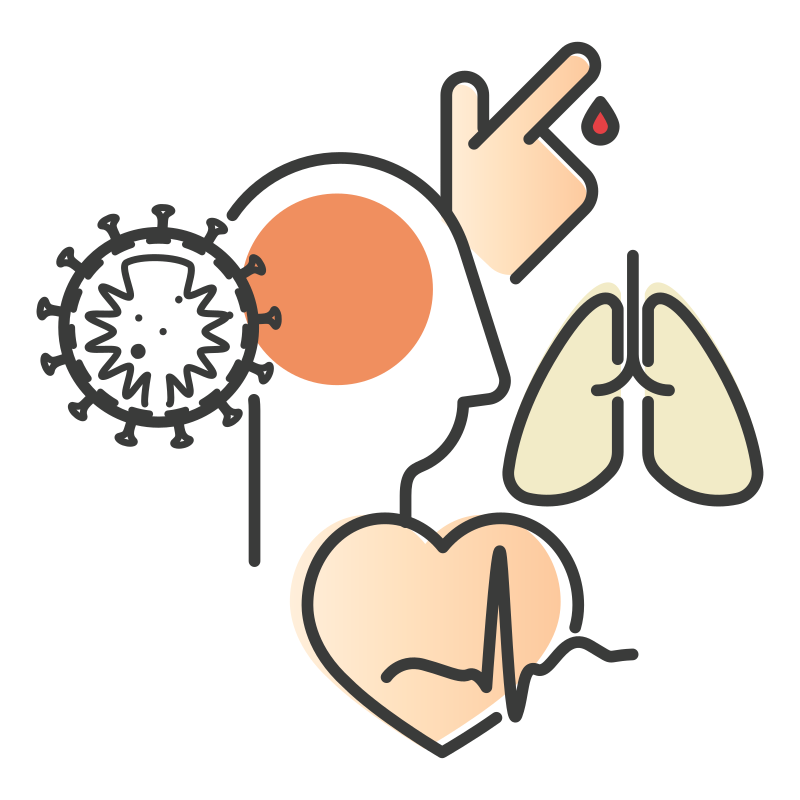
Medical comorbidities
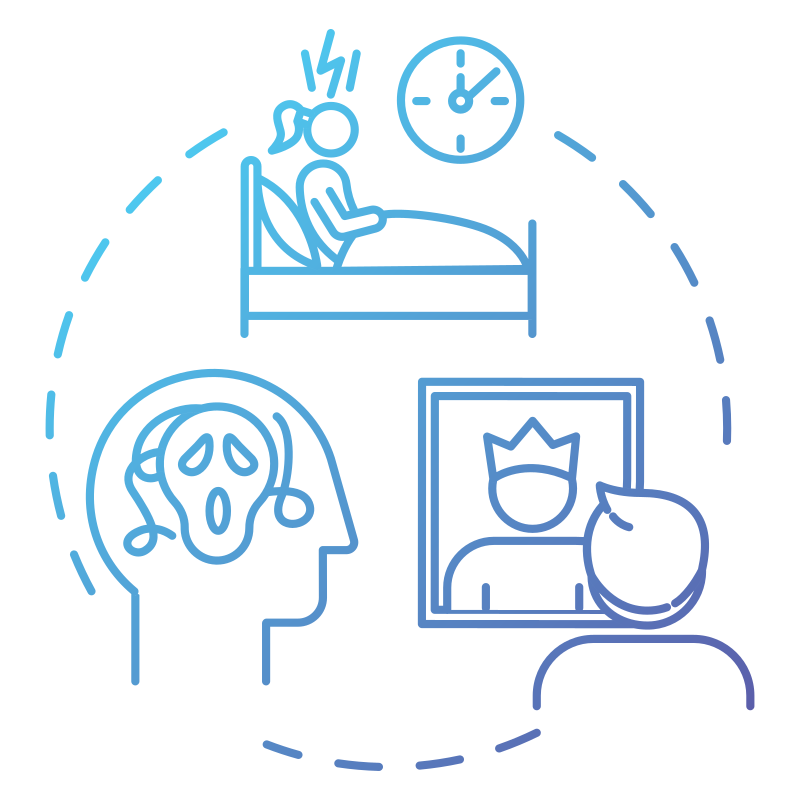
Other psychiatric and cognitive disorders
Treatment
Non-pharmacological
| Lifestyle changes | Sleep, diet, exercise, socialization |
| Behaviour therapy | Relaxation therapy, systemic desensitisation, exposure and response prevention |
| Cognitive therapy | Cognitive behaviour therapy |
| Mindfulness | Focusing on the "now" |
| Miscellaneous | Yoga, art therapy, dance therapy, music therapy, cognitive rehabilitation, social activities/networking, alternative therapies |
Pharmacological
| SSRI | Escitalopram, Sertraline |
| SNRI | Venlafaxine, Desvenlafaxine, Duloxetine |
| Others | Mirtazapine, Pregabalin, Tianeptine, Buspirone |
| TCA | Nortriptyline |
Conclusion:
Clinical practice guidelines can help streamline the process of diagnosis and treatment for geriatric anxiety disorder.
Abbreviations:
GAD: Generalised Anxiety Disorder; OCD: Obsessive compulsive disorder; SNRI: Serotonin-norepinephrine reuptake inhibitor; SSRI: Selective serotonin reuptake inhibitor; TCA: Tricyclic antidepressant.
Reference:
Subramanyam AA, Kedare J, Singh OP, et al. Clinical practice guidelines for Geriatric Anxiety Disorders. Indian J Psychiatry. 2018;60(Suppl 3):S371-S382.
Articles

Combination Treatment Of SSRI And BZD For Depression Associated With Anxiety
Dar SA, Bhat BA, Jan MM. Addition of benzodiazepines to selective serotonin reuptake inhibitors to optimize treatment of depression: a hospital based study. Int J Res Med Sci. 2018;6(6):2081-5.

Impact Of Anxiety On Quality Of Life
Chattopadhyay K, Singh AP. Anxiety and its impact on quality of life among urban elderly population in India: An exploratory study. Indian J Res Homoeopathy. 2016;10:133-41.

Pharmacotherapy For Anxiety Disorders: From First-Line Options To Treatment Resistance
Melaragno AJ. Pharmacotherapy for anxiety disorders: from first-line options to treatment resistance. Focus. 2021;19(2):145-60.
Case study

The Role of SSRI and BZD Combination Therapy in Anxiety Disorders
A 34-year-old female patient presented with symptoms of anxiety. The patient had a 10-month history of anxiety symptoms.

The Role of SSRI and BZD Combination Therapy in Anxiety Disorder with Comorbid Depression
A 38-year-old male patient presented with symptoms of anxiety and comorbid depression.
Blog

Management of anxiety in emergency
Anxiety disorders, characterised primarily by intense and exaggerated anxiety without real threats, are frequently encountered in the general population.

Age-based prevalence and factors associated with anxiety disorder
Anxiety disorders (ADs) have a significant impact on individuals' quality of life and productivity, contributing to substantial economic losses at the national level.