Blog
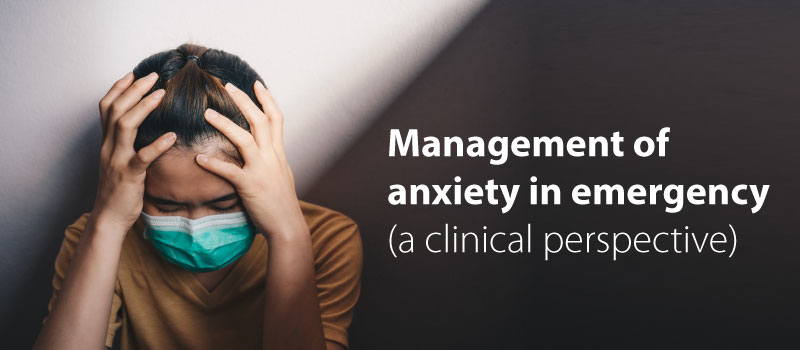
Anxiety disorders, characterised primarily by intense and exaggerated anxiety without real threats, are frequently encountered in the general population.
Panic disorder (PD) is described as acute intense anxiety episodes occurring with or without agoraphobia. Panic attacks are often seen in emergency departments (ED).
Anxiety-related issues frequently coincide with alcohol and substance abuse, thereby complicating diagnosis. Knowledge about anxiety disorders and panic attacks is vital for clinicians in ED, as patients may feel debilitated during an anxiety attack and embarrassed afterward.
Clinical Manifestation
Anxiety presentations in ED can be categorised into:
- Primary psychiatric illness like generalised anxiety disorder
- Medical conditions or substance abuse mimicking anxiety symptoms (e.g., hyperthyroidism)
- Response to either stress or stressful events, like acute stress disorder
- Anxiety disorder occurring alongside other illnesses.
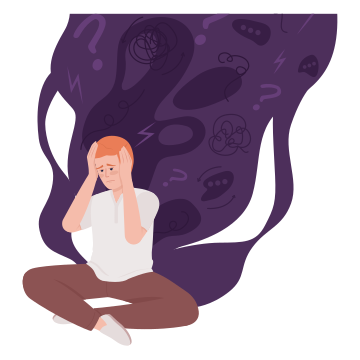
Key Features of panic attack
PD combines physical and cognitive symptoms, with rapid onset, symptoms peaking within 10 minutes, and persisting for about an hour. A panic attack involves minimum 4 of the following signs or symptoms:
- Palpitations or accelerated heart rate
- Sweating
- Shortness of breath or choking sensation
- Chest pain or discomfort
- Nausea or abdominal distress
- Trembling or shaking
- Dizziness or faintness
- Depersonalisation or derealisation
- Numbness or tingling
- Chills or hot flushes
- Fear of losing control or dying
Medical Conditions Causing Anxiety
Numerous medical conditions can cause anxiety, including cardiovascular, respiratory, metabolic, endocrine, neurological, and inflammatory disorders, as well as substance toxicity and infections.
Management
In the ED, initial assessments aim to exclude acute physical emergencies. Vital signs, blood tests, electrocardiograms, and imaging may be necessary. Screening tools can assist in diagnosing anxiety or PD, even without a psychiatrist.
Pharmacotherapy
- For terminating the panic attacks, rapid-onset benzodiazepines like Lorazepam, Alprazolam, or Clonazepam are considered the cornerstones.
- Long-term treatment involves selective serotonin reuptake inhibitors (SSRIs) like Paroxetine, Fluoxetine, Sertraline, or Escitalopram. Tricyclic antidepressants (TCAs) and serotonin-norepinephrine reuptake inhibitors (SNRIs) may also be prescribed.
Non-Pharmacological Therapy:
Reassurance of the patient during an attack helps in alleviating the symptoms.
- Psychotherapies such as cognitive-behavioural therapy (CBT), interpersonal therapy, and mindfulness therapy are effective in the long-term.
- Lifestyle modifications like eliminating stimulants, getting adequate sleep, and regular exercise are recommended.
- Relaxation techniques like deep breathing exercises and guided imagery can also be beneficial.
Role of Emergency Physicians
ED clinicians play a crucial role in recognising and managing anxiety and PD. They must provide initial treatment, and make referrals when necessary. Early intervention reduces overall costs and improves patient outcomes.

In summary, anxiety and PD are common ED presentations. Timely recognition and treatment, including pharmacological and non-pharmacological approaches, can alleviate symptoms and improve patient outcomes.
Reference:
Raju NN, Kumar KS, Nihal G. Clinical Practice Guidelines for Assessment and Management of Anxiety and Panic Disorders in Emergency Setting. Indian Journal of Psychiatry. 2023;65(2):181.
Blog

Age-based prevalence and factors associated with anxiety disorder
Anxiety disorders (ADs) have a significant impact on individuals' quality of life and productivity, contributing to substantial economic losses at the national level.
Case study

The Role of SSRI and BZD Combination Therapy in Anxiety Disorders
A 34-year-old female patient presented with symptoms of anxiety. The patient had a 10-month history of anxiety symptoms.

The Role of SSRI and BZD Combination Therapy in Anxiety Disorder with Comorbid Depression
A 38-year-old male patient presented with symptoms of anxiety and comorbid depression.
Articles

Combination treatment of SSRI and BZD for depression associated with anxiety
Dar SA, Bhat BA, Jan MM. Addition of benzodiazepines to selective serotonin reuptake inhibitors to optimize treatment of depression.

Impact of anxiety on Quality of Life
Chattopadhyay K, Singh AP. Anxiety and its impact on quality of life among urban elderly population in India.